
Germany Beyond Berlin & Munich: Where Should You Go Next?
Katharina Hepler • October 27, 2026
From alpine villages in the south to historic towns in the north, discover a different side of Germany.
What do you think of when you think about Germany? Berlin? Munich? Neuschwanstein? Other famous sights? While those destinations are awesome and absolutely worth a visit, Germany offers so much more.
It is more than the stereotypes of Lederhosen and Dirndl, beer, bread, and sausages. All those things are great—and hey, I love my Dirndl and will never turn down beer, bread, and sausages! But they don't represent all the diverse regions you'll find in Germany.
While Germany is smaller than Texas in area, its landscapes, regional histories, and local specialties are remarkably diverse.
I can't give you an exhaustive list of must-visit places—and I don't want to. Instead, I'd like to inspire you to look beyond big cities like Berlin and Munich and famous sights like Neuschwanstein Castle, and discover a different side of Germany.
The South
The south is the part of Germany I know best. It's where I'm from, where I still have family, and where I've spent many weekends exploring on short trips. Let's start with three places that each offer something a little different.
Passau
This town of about 53,000 people is located in Lower Bavaria, close to the Austrian border, and is also known as the “City of Three Rivers.” Here, the Danube, the Inn, and the Ilz flow together, with the combined waters continuing along the Danube. From above, such as from Veste Oberhaus fortress, you can enjoy a wonderful view of the confluence, where the different colors of the three rivers can be seen.
Passau is full of quaint streets and beautiful churches and is home to the Glass Museum, which houses a remarkable collection of European glass. The town is also the starting point for a popular cycling route along the Danube toward Vienna and frequently appears on itineraries for Danube river cruises.
Oberammergau
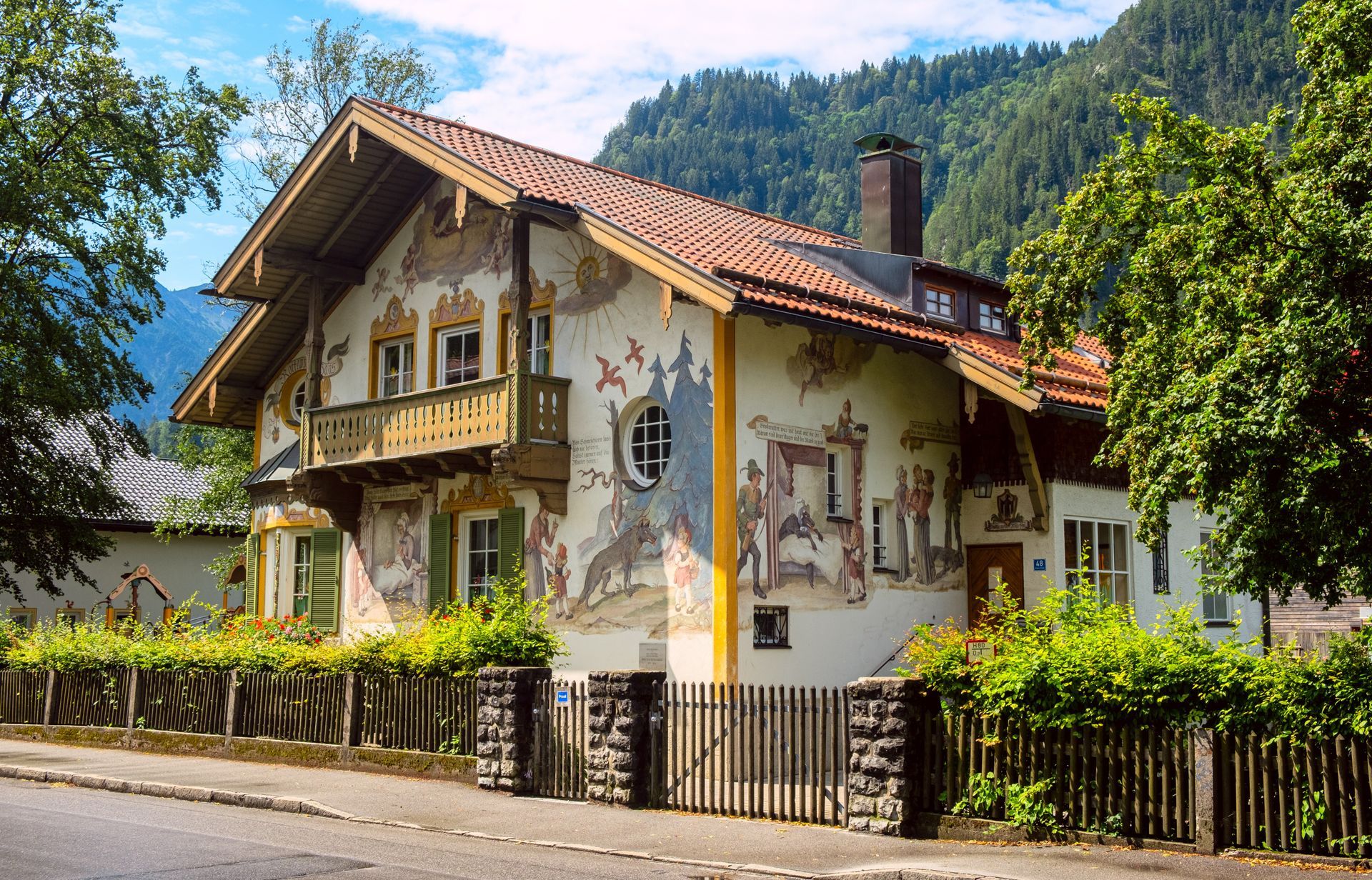
Located in Upper Bavaria, Oberammergau is nestled along the Ammer River in the Alps. It's a picturesque village with beautifully fresco-painted houses, famous for its woodcarving traditions and the world-renowned Passion Play, performed by the villagers roughly every ten years.
I had the opportunity to see the play in 2010. The next performance season is scheduled for 2030, with individual ticket sales expected to begin in 2028. Some tour operators already offer itineraries featuring the Passion Play, making this something to consider if you'd like to attend.
But even outside Passion Play season, Oberammergau is a beautiful destination in its own right. It's an excellent base for hiking and exploring the surrounding Alps, as well as visiting famous sights such as Neuschwanstein Castle and Linderhof Palace, both associated with the Bavarian King Ludwig II.
Lake Constance
Lake Constance, known as Bodensee in German, is one of Europe's large lakes, bordering Germany, Austria, and Switzerland. Located at the northern edge of the Alps, the region offers stunning mountain scenery, historic towns, and extensive orchards.
Some highlights on the German side include Lindau, with its historic harbor; Constance (Konstanz), the largest city on the lake, with its medieval old town; and Mainau, the flower island famous for its extensive gardens and exotic plants.
Also worth a visit is the Lake Dwelling Museum in Unteruhldingen, where reconstructed prehistoric dwellings offer a glimpse into life around the lake during the Stone Age and Bronze Age.
For families with children, Affenberg Salem is another highlight. Here, up to 200 Barbary macaques roam freely in a large forest enclosure. It's an experience my own kids still talk about!
The West
Moving west, I'd like to introduce you to a town that's on my own travel wish list.
Trier
Founded in 16 BC, Trier is considered Germany's oldest city and has a remarkable Roman history. During the late 3rd and early 4th centuries, it served as one of the capitals of the Roman Empire and an imperial residence.
Today, visitors can explore impressive Roman remains, including the Porta Nigra and the Imperial Baths, as well as Trier Cathedral. Several of the city's Roman monuments and its cathedral are part of its UNESCO World Heritage Site.
The city is also located in the heart of the Moselle wine-growing region, known for its Riesling wines, picturesque river scenery, and excellent dining.
The North
Northern Germany feels and looks very different from what many people picture when they think of Germany.
Lübeck
Located on Germany's Baltic coast, northeast of Hamburg, in the state of Schleswig-Holstein, Lübeck is a UNESCO World Heritage Site and a former leading city of the Hanseatic League, the powerful trading network of northern European towns.
Its island-shaped old town has retained much of its historic layout, with narrow streets and distinctive Brick Gothic architecture. Lübeck is also known as the “City of the Seven Spires” and for its world-famous marzipan.
The East
From the beautiful north, let's continue east to Görlitz, Germany's easternmost city. Located in Saxony right on the Polish border, this historic town has even served as a backdrop for Hollywood films such as Inglourious Basterds and The Grand Budapest Hotel.
Görlitz
Görlitz was spared much of the destruction that affected other German cities during World War II and is home to more than 4,000 historic buildings from different architectural periods, including Gothic, Renaissance, Baroque, and Art Nouveau. This remarkable collection makes it one of Germany's most significant architectural treasures.
Nestled along the Neisse River, Görlitz also offers a unique opportunity to experience two countries in one visit. You can stroll across the Altstadtbrücke, a pedestrian bridge, straight into the Polish town of Zgorzelec on the opposite riverbank.
Discover the Germany that speaks to you
From the alpine scenery of southern Bavaria to the Hanseatic architecture of the north, the Roman history of Trier, and the architectural treasures of Görlitz, Germany offers a remarkable variety of experiences.
And these are just a few examples. Whether you're interested in history, architecture, nature, local traditions, or experiences the whole family can enjoy, there's so much more to discover beyond the country's best-known destinations.
Even though I grew up in Germany and have spent years exploring it, my own Germany bucket list is far from complete. In fact, a few of the places I've shared here—like Trier, Lübeck, and Görlitz—are still on my list, too. And that's part of what makes travel so exciting: there's always somewhere new to discover, even in a place you think you know well.
Of course, you don't have to fit all of these places into one trip. Germany may be smaller than Texas, but distances, travel time, and the experiences you want to enjoy still matter when planning an itinerary. Sometimes adding one lesser-known town—or spending an extra night somewhere that catches your interest—can make a trip feel much more personal.
So, when you plan your next trip to Germany, by all means enjoy Berlin, Munich, and Neuschwanstein Castle. But leave a little room for something different, too. You might discover a new favorite place along the way.